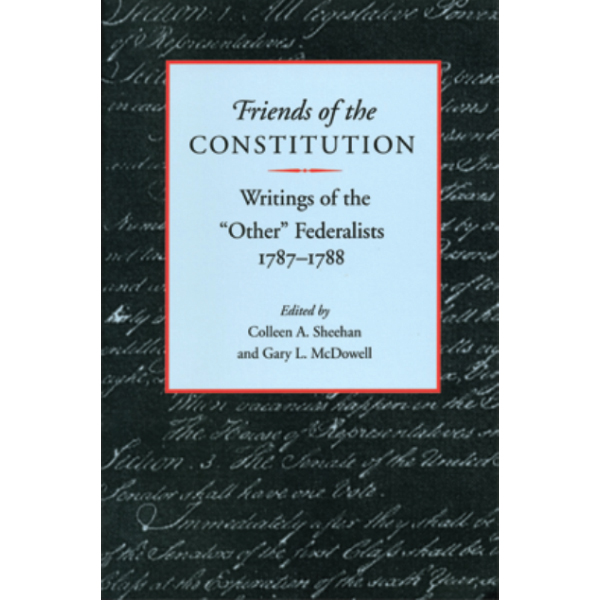
Friends of the Constitution
$8.99
Disunion meant chaos. Federalists across the states warned that only a stronger Constitution could preserve liberty and prosperity. Friends of the Constitution revives their overlooked essays, pamphlets, and letters — voices beyond Madison, Hamilton, and Jay — organized under three themes: the necessity of union, limited but energetic government, and civic virtue. Here stand Dickinson, Wilson, Jay, Franklin, and others urging Americans to seize their “political probation.” Essential reading for anyone serious about the contested birth of the Republic.
Description
“The citizens of America are Actors on a most conspicuous Theatre,” Washington declared in 1787. For him and other Federalists, the ratification struggle was nothing less than the Revolution’s unfinished act. Friends of the Constitution: Writings of the “Other” Federalists, 1787–1788 gathers the pamphlets, essays, and speeches of these defenders who understood the fight in cosmic terms: liberty or disunion, ordered government or anarchy. Here, in their own words, they make the case that the Constitution offered the best hope of securing a republic worthy of sacrifice.
Unlike the canonical Federalist Papers, these writings reach a wider chorus. John Dickinson insists that man needs society to be secure, freedom to be happy; James Wilson links civil government to human flourishing; John Jay reminds Americans that the “cause of freedom” depends on their wise self-rule. Anonymous writers, adopting pen names like “Philodemos” and “State Soldier,” warn against delay and rebut charges that the new frame of government would extinguish liberty. Franklin’s irony and Washington’s commanding presence gave weight to the cause, as did the countless state-level arguments reproduced here.
The volume is organized around three themes: the necessity of union amid economic collapse and foreign menace; the demand for energetic but strictly limited government with delegated powers; and the role of civic virtue in sustaining freedom. Together these voices show Federalists grappling with imperfection, compromise, and the risks of another convention, yet concluding that the proposed Constitution was both prudent and providential.
For students of the Constitution, political thought, and America’s founding era, this collection is indispensable. It reveals how ordinary pamphleteers and revered statesmen alike saw themselves as trustees of liberty for generations unborn. Their challenge remains: if Americans should lose their freedom, the fault will be entirely their own. (1998ed, 523pp, pb)