
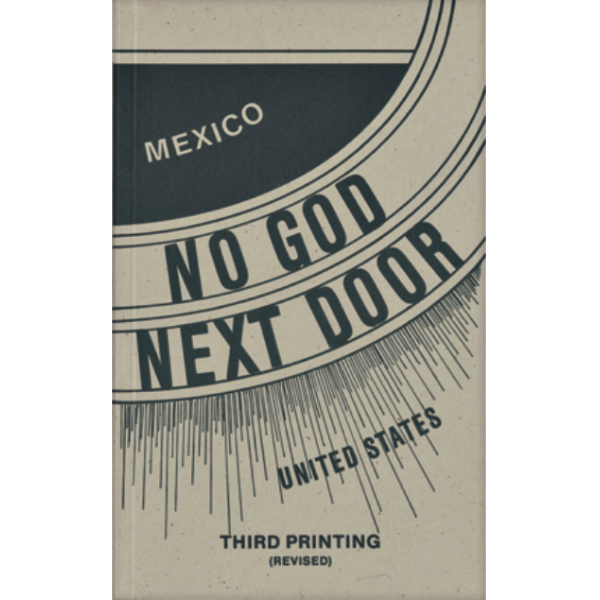
No God Next Door
$15.99
Communism’s first brutal campaign against religion wasn’t in Russia — it was next door in Mexico. Published in 1935, Fr. Michael Kenny’s No God Next Door documents how the Catholic Church was hounded, liberties stripped, and society broken under Red rule. This enduring account exposes the forces behind Mexico’s tragedy and warns of America’s responsibility. Newly reissued, it remains a chilling record of persecution and a call to vigilance.
Description
Before the Bolsheviks seized Russia, the communists had already opened their assault on freedom of religion in Mexico. Churches closed, priests hunted, and believers silenced — the campaign was ruthless, calculated, and systematic. Fr. Michael Kenny, S.J., saw the storm clearly. In No God Next Door: Red Rule in Mexico and Our Responsibility, first published in 1935, he traced how atheistic ideology translated into a deliberate war against the Catholic Church and against liberty itself.
Kenny situates the Mexican tragedy in a broader struggle: communism’s advance was never simply local, but part of a global program. He documents the antireligious decrees, the confiscations of property, the terror inflicted on clergy, and the propaganda spread through schools and press. He names the actors, records the laws, and demonstrates that persecution in Mexico was not an accident of politics but a weapon wielded by ideology.
This was not only Mexico’s burden. Kenny pressed the point that America had a stake — both moral and practical. U.S. policy and American Freemasonry abetted the regime, and silence at the border signaled complicity. The book insists that the responsibility to resist fell not only on Mexicans but also on their northern neighbor, whose future was tied to whether freedom or tyranny prevailed next door.
Nearly a century later, this work stands as a primary source on one of the twentieth century’s most neglected persecutions. For readers of history, faith, and political warning, No God Next Door is both record and rebuke: persecution thrives when ignored, but it falters when exposed. (1935 ed, 199pp, pb)
You may also like…
-

We Are The John Birch Society (Cased)
$1.50 Add to cart -

The Communist Manifesto
Price range: $5.99 through $9.95 Select options This product has multiple variants. The options may be chosen on the product page -

In the Shadows of the Deep State: Destroying Our Sovereignty
$0.75 Add to cart -

The Doctrine of the Lesser Magistrates
$13.99 Add to cart
